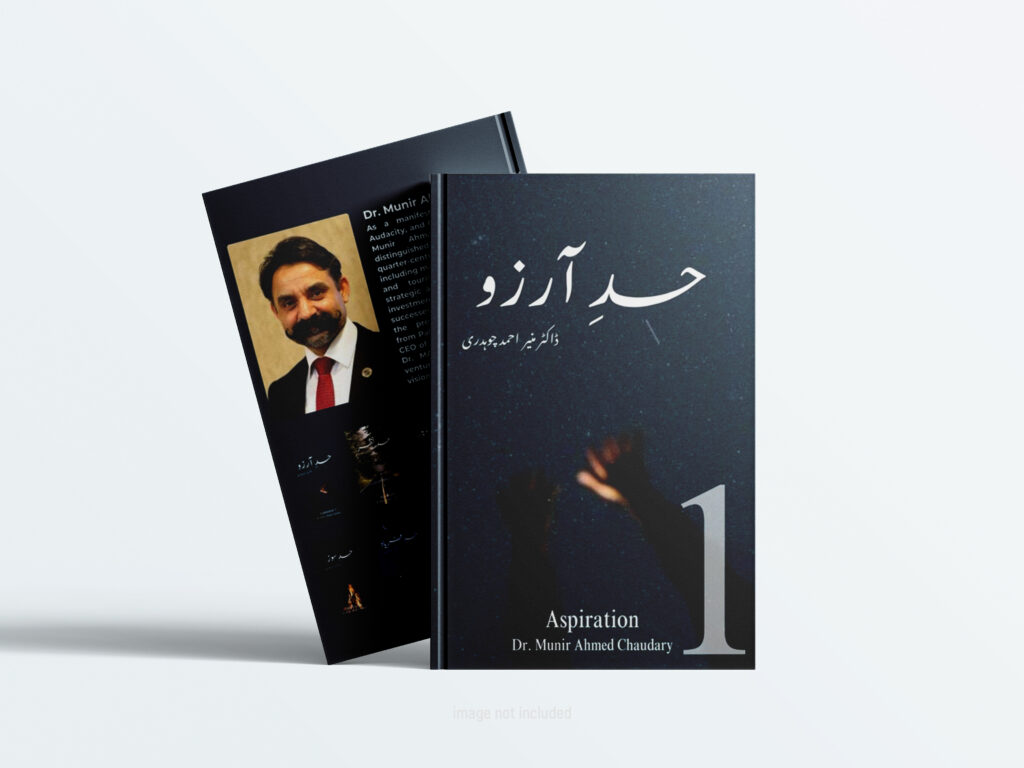

Dr. MAC Munir Ahmad Chaudhry Unveils a New Global Economic Order for Elite Businesses and Investors
The global economic landscape stands at a critical juncture, with traditional models of commerce and finance increasingly giving way to integrated ecosystems. Dr. MAC Munir Ahmad Chaudhry, Group CEO of Al Maktoum Holding Group, is not just observing this shift but actively architecting its future through the 1B Business & Banking Ecosystem. This ambitious framework, championed by Chaudhry, aims to unify business networks, financial infrastructure, and a distinct economic philosophy, specifically targeting the top one percent of global influence, wealth, and leadership. At the heart of Chaudhry’s vision is the belief that exponential growth becomes an inevitability when business, capital, and vision align seamlessly within a single ecosystem. This isn’t merely a theoretical construct; it manifests through five interconnected pillars designed to create a strategic pathway for global economic participation. The initial entry point is 1B.world, envisioned as a global community of “Business Saviors.” This platform is designed to connect influential entrepreneurs, investors, and strategic leaders, fostering an environment where collaboration overshadows competition. It seeks to build a formidable network that transcends national and industrial boundaries, aligning pioneers and policymakers around shared opportunities. Supporting this global network is 1Be, the financial infrastructure layer. This component integrates fintech innovation, comprehensive financial services, brokerage capabilities, and future banking solutions. Its purpose is clear: to facilitate the movement of capital and investments, expanding financial accessibility for ecosystem members. The ambition here is to bridge global capital with global opportunity, equipping entrepreneurs and investors with the necessary tools to navigate and thrive in a new economic order. Complementing 1Be is the One Card, serving as the critical financial access layer. This isn’t just another payment instrument; it’s a direct conduit to the broader 1Be financial infrastructure, granting members seamless access to investment platforms, global payments, and exclusive ecosystem privileges. It’s about empowering cross-border financial mobility and robust commercial engagement. Beyond networking and finance, the ecosystem addresses the tangible needs of businesses to establish and expand operations. This is where 1BZ, or One Business Zone, comes into play. Envisioned as a global business gateway, 1BZ offers a strategic environment for entrepreneurs, corporations, and investors to set up shop, forge partnerships, and penetrate new markets. It provides the essential support, regulatory guidance, and international access required for ideas to evolve into thriving enterprises, ultimately creating lasting business legacies. The underlying philosophy tying all these operational elements together is 1BO, or One Business Order. This is not another platform but rather an economic philosophy and a comprehensive global framework for future commerce and leadership. One Business Order posits a world where commercial endeavors extend beyond mere profit generation, instead focusing on stability, cooperation, and long-term prosperity. It advocates for a new era where businesses operate with strategic responsibility, capital is directed towards innovation and sustainability, and global collaboration replaces fragmented economic competition. This philosophical underpinning, articulated by Chaudhry, aims to foster a more integrated, ethical, and resilient global economy. The entire 1B Ecosystem is deliberately structured for those at the pinnacle of ambition, individuals and institutions who shape industries, direct capital flows, and influence economic trajectories. It consolidates network, capital, and philosophy into a unified architecture, enabling participants to operate at a level where significant global impact becomes a tangible reality. Dr. Chaudhry contends that the world is not lacking in businesses, but rather in integrated systems capable of aligning business, finance, and vision under a singular strategic framework. The 1B Business & Banking Ecosystem is his direct answer to this perceived void. It represents a platform for those who understand that true future leadership lies not just in accumulating wealth, but in constructing systems that generate sustained prosperity across generations. The leaders of tomorrow, in his view, will transcend the traditional role of merely running companies; they will be the architects of comprehensive ecosystems that define the next chapter of the global economy.